The Temples of Agrigento: Concordia, Juno, Heracles, Olympian Zeus and the Rest of the Valley
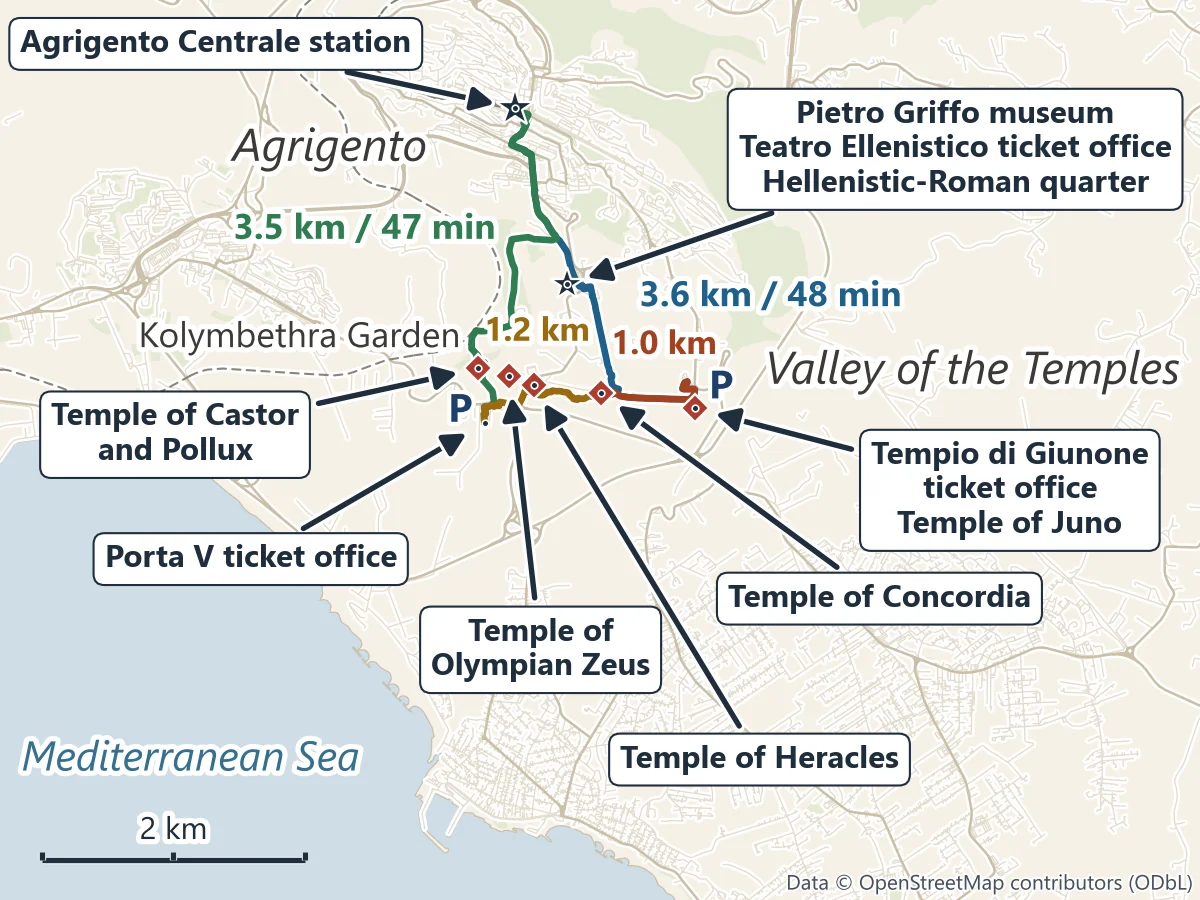
The Greek temples of Agrigento, east to west: Juno, Concordia, Heracles, Olympian Zeus and its telamon, Castor and Pollux, Vulcan, and the Pietro Griffo museum.
The temples of Agrigento are the Doric temples of Akragas, a Greek colony founded in the 6th century BC, strung along a ridge south of the modern town. From east to west they are the Temple of Juno, the Temple of Concordia, the Temple of Heracles, the fallen Temple of Olympian Zeus, the Temple of Castor and Pollux and, past the Kolymbethra Garden, the Temple of Vulcan. Concordia is the one that still stands nearly whole. Empeeria’s guide takes you past Concordia and Heracles to Olympian Zeus in two hours, the entrance ticket included, from US$33.
Check dates for the guided two hours
Akragas and the Archaeological Area of Agrigento
Akragas was founded as a Greek colony in the 6th century BC, and the Carthaginians destroyed the city in 406 BC. UNESCO listed the Archaeological Area of Agrigento in 1997, and its boundary takes in the whole ancient city: the necropolis outside the walls, the excavated houses of Hellenistic and Roman Agrigento, the network of underground aqueducts and a wide stretch of land still unexcavated. The temples are what most people mean by the Agrigento ruins, and they are only part of it.
The Temple of Juno (Hera Lacinia)
The Temple of Juno, also called the Temple of Hera Lacinia, stands at the east end of the ridge, at its highest point, and gives its name to the Tempio di Giunone ticket office below it. The park dates the start of its building, like Concordia’s, to the years after the tyranny at Akragas ended. It is the first temple on every walk that starts from the east gate.
The Temple of Concordia
The park calls it one of the best-preserved temples of ancient Greece. It is Doric, built in the second half of the 5th century BC, with 6 columns across the front and 13 down each side, and it is the only temple in Agrigento that keeps almost all of its entablature and both of its pediments. The name comes from a Latin inscription of the mid-1st century AD that the historian Fazello wrongly linked to it. At about the end of the 6th century AD the bishop Gregory turned it into a church of Saints Peter and Paul, and that explains the twelve arches through the walls of its cell: they date from its life as a church.
The Temple of Heracles
The Temple of Heracles (Hercules to the Romans) is the oldest of the Doric temples of Agrigento, built at about the end of the 6th century BC, with 6 columns by 15. The park treats it as the start of the city’s ring of Doric temples.
The Temple of Olympian Zeus and the Telamon
The Temple of Olympian Zeus was begun after Akragas defeated the Carthaginians in 480 BC. At about 112 by 56 metres it was enormous, and it was never finished. Between its half-columns stood telamons, giant stone figures about 8 metres tall on ledges about 11 metres up, bracing the entablature. Today it is a field of fallen blocks.
Two telamons let you see what stood here. In the Pietro Griffo museum, the best preserved, 7.65 metres tall, is reconstructed against the back wall of the temple’s own room, which the park calls the largest statue from antiquity in Sicily. On the site itself, a new reconstruction nearly 8 metres tall was raised on 29 February 2024, rebuilt from over 90 fragments of at least eight telamons on a 12-metre steel frame, after about twenty years of study with the German Archaeological Institute in Rome.
The Temple of Castor and Pollux and the Kolymbethra Garden
Further west, past Zeus, is the Temple of Castor and Pollux, also called the Temple of the Dioscuri. Below it lies the Kolymbethra Garden. Around 480 BC, the historian Diodorus records, the tyrant Theron had tunnels dug to bring water to the city, ending in a great basin, the Kolymbethra. It later became a fish pond and then a citrus grove. FAI has run it since 1999: about 5 hectares of citrus, ancient olives and Mediterranean scrub, with underground galleries whose paths run about 185 metres. The garden has its own ticket. What is free and what is not.
The Temple of Vulcan
The Temple of Vulcan stands on the hill west of the Kolymbethra Garden and is reached only through it. Little survives: a short stretch of its base with four steps, and two columns. It was Doric, dated to about 430 BC, with 6 columns by 13.
The Pietro Griffo Museum and the Hellenistic-Roman Quarter
The regional archaeological museum, at Contrada San Nicola 12, stands on the site of the ancient upper agora, in a 1960s building by Franco Minissi joined to the restored 14th-century convent of San Nicola. It holds over 5,000 finds from prehistory to the Greek and Roman city, and the room of the Temple of Olympian Zeus has the telamon, three more telamon heads and models of the temple. It opens daily from 9:00 AM to 7:30 PM, last entry 7:00 PM. The excavated houses of Hellenistic and Roman Agrigento lie near it, by the Teatro Ellenistico ticket office, which is closed from November to March.
Seeing the Temples with a Guide
| Option | Which temples | What it costs | |
|---|---|---|---|
| Empeeria, two hours | Concordia, Heracles, Olympian Zeus, with a certified local guide | From US$33, ticket included | Check dates for the guided two hours |
| Towns of Italy, two hours | Hera Lacinia, Concordia, Olympian Zeus, with a licensed guide | From US$53, ticket included | See the guided two hours |
| Empeeria, late afternoon | Concordia, Heracles, Olympian Zeus, about 30 minutes at each | From US$33, ticket included | See the late-afternoon walk |
| Emystour, from Palermo | Two hours on the Via Sacra, then the Villa Romana del Casale | From US$130; tickets on the day | See the Palermo day |
| On your own | All of them, at your pace | EUR 17 full; under-18s free | Compare the tickets |
Tour prices are one adult’s regular price on GetYourGuide; the ticket figure is the park ticket seller’s own.
For the time each part takes, see how long to allow.
FAQ
How many temples are there in Agrigento?
Six are named along the Valley of the Temples: Juno, Concordia, Heracles, Olympian Zeus, Castor and Pollux, and Vulcan. Only Concordia stands nearly complete.
Which is the best-preserved temple in Agrigento?
The Temple of Concordia, the only one in Agrigento that keeps almost all of its entablature and both pediments. It served as a church from about the end of the 6th century AD.
How old are the Agrigento Greek temples?
The oldest, the Temple of Heracles, dates from about the end of the 6th century BC; Concordia from the second half of the 5th century BC; the Temple of Olympian Zeus was begun after 480 BC.
Two Hours with a Guide, the Ticket Included
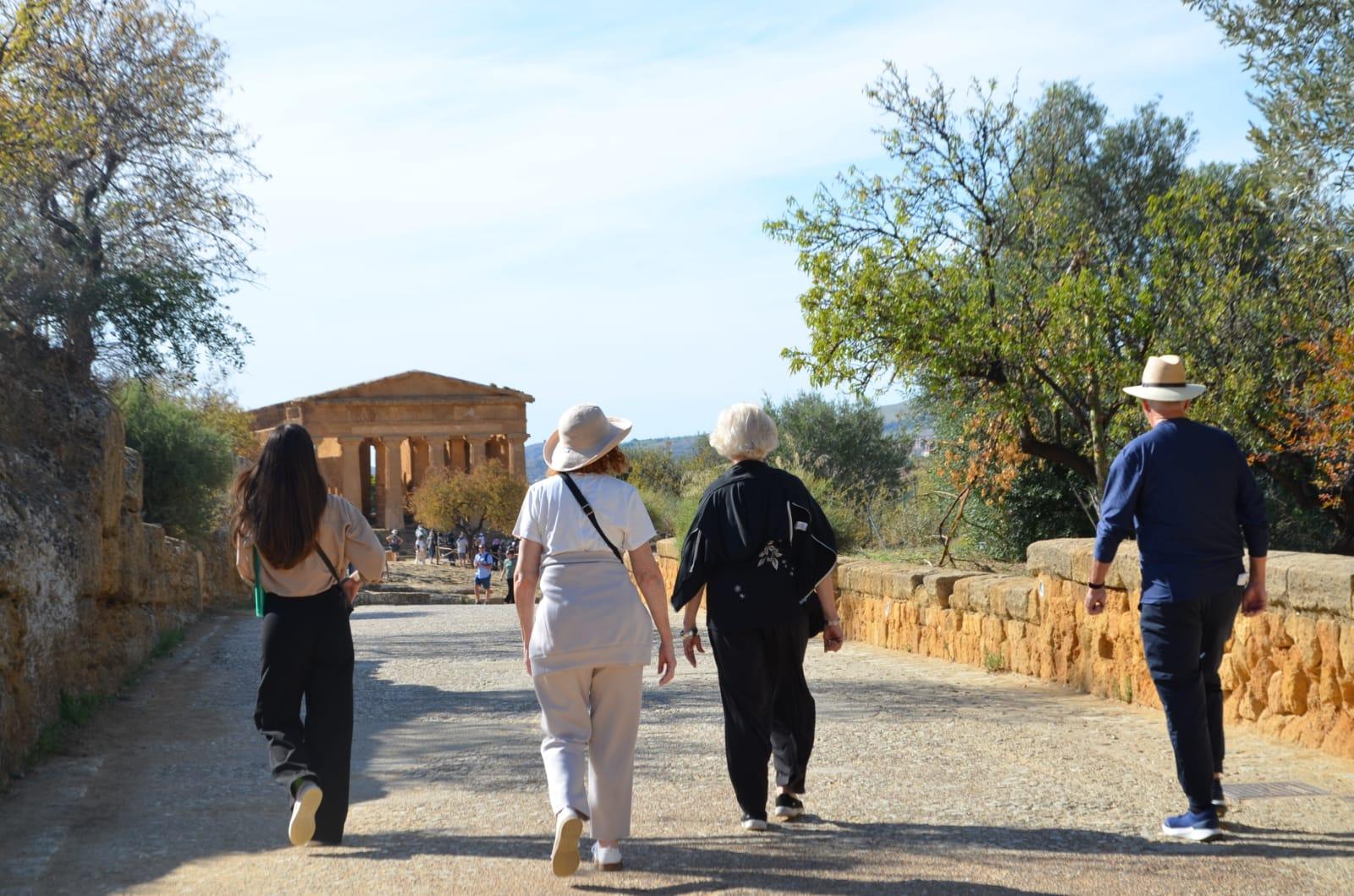
Empeeria's two-hour walk with a certified local guide runs from the Tempio di Giunone side past Concordia and Heracles to the Temple of Olympian Zeus. The guide hands you the entrance ticket at the meeting point.
Check dates for the guided two hours